Slab leak repair and replacement for Florida homes and condos
A warm patch of tile, a water bill that keeps climbing, the sound of water running when every tap is closed. We connect you with experienced local leak-detection technicians who find the leak under the slab and explain the slab leak repair and replacement options, from Fort Myers and Naples to Fort Lauderdale, West Palm Beach and Tampa Bay, and across 277 Florida cities and communities.
Calls answered any hour. Timing is confirmed on the call.

- 24/7Same-day and emergency response
- PricingUpfront pricing, no hidden fees
- GuaranteeWorkmanship guarantee on completed work
- EquipmentAcoustic, thermal and pressure-testing tools
- LocalCrews in Florida slab homes and condos every day
Is it a slab leak?
Most Florida homes sit on a concrete slab with water lines running through the soil beneath it. When one of those lines starts leaking, the signs are usually small and easy to explain away at first. Any one of these on its own is worth a closer look; two or three together usually mean it's time to call.
A warm spot on the tile
A patch of floor that feels warmer than the rest, often near the kitchen, a bathroom or the water heater, can mean a hot-water line is leaking under it.
A water bill that won't come down
Usage climbing month after month with no change in habits. In Florida, the pool and irrigation are the first things to rule out, then the lines under the slab.
Running water when everything is off
A faint hiss or trickle inside a wall or under the floor when no tap, appliance or sprinkler zone is running. It is often easiest to hear late at night.
Damp baseboards, lifting tile
Baseboards that stay damp, trim that swells, grout lines that darken or tiles that loosen and lift, with no spill or plumbing fixture nearby to explain them.
A water heater that never rests
If the heater seems to run all day, it may be refilling to replace hot water that is escaping through a leak in the line beneath the floor.
A musty smell with no source
A stale, damp smell that lingers in a closet or along an interior wall even after cleaning, where nothing visible is wet.
Describe what you're noticing. The technician we dispatch will know where to start.
Away for the season?
A slab leak in an empty house has nobody to hear it. Water can run under the floor for weeks while the home is closed up, and Florida's sandy soil can carry it away without a puddle ever showing. Often the first sign is a water bill that arrives months later, or a call from a neighbor or property manager who noticed damp baseboards or a meter that never stops turning. A short routine before you leave and when you return makes a long-running leak far less likely.
Before you leave
- Find the main shutoff and make sure it turns.Know where it is and that it moves by hand. If it's stiff or seized, have it looked at before you go rather than forcing it.
- Do a meter check while you're still home.With every tap, appliance and irrigation zone off, the meter should sit still. Movement now is worth finding before months away.
- Decide whether to turn off the main.Many owners shut the water off for the season. If irrigation or a pool needs water while you're gone, ask how to plan around it.
- Write down the meter reading.A photo works. Comparing it on your return shows whether any water moved while the house was empty.
- Leave a key and your number with someone nearby.A manager, neighbor or house-watcher who can look in, read the meter and let a technician in if something changes.
Coming back: the first hour
- Read the meter before you use any water.Compare it with the reading you left. If the main was off, the numbers should match.
- Walk the floors.Warm patches on tile, damp baseboards and darkened grout are easier to notice in a quiet house before daily life starts again.
- Open the main slowly and listen.With every fixture closed, listen at walls and floors for running water.
- Repeat the meter check an hour later.If it moves with everything off, call before normal use makes the leak harder to separate from the household's water.
Looking after someone else's home? Managers, neighbors and house-watchers can call us directly. Have the owner's contact details and the meter reading ready, and let us know who can open the door.
Owners, managers and neighbors can all make the call.
The five-minute meter check
This is the one test a homeowner can safely do, and it answers a single question: is water leaving somewhere on the property? It doesn't say where. A moving meter can point to the slab, but it can just as easily be a running toilet, an irrigation line or an automatic pool fill.
Leave the rest to the technician. Breaking concrete, digging or pressure testing lines yourself can make a leak worse and harder to find.
Tell us what the dial did. It helps the technician plan the visit.

Stop every water use. Taps, showers, dishwasher, washing machine, ice maker, the irrigation timer and any automatic pool fill.
Find the meter. Usually in a box near the street or the edge of the lot. Condo meters are often grouped, and the manager may need to help.
Watch the leak indicator. Most meters have a small dial or triangle that turns with even a slow flow. Note the full reading as well.
Give it a few minutes. If the indicator is still, leave everything off for half an hour and compare readings to catch a slower leak.
Write down what you saw. Moving or still, and both readings. It's one of the first things the technician will ask.
Pool or slab?
Florida has a lot of pools and irrigation systems, and either one can run up the same kind of bill as a slab leak. Before anyone looks under the floor, the technician separates the house lines from everything outside.
- The pool level drops faster than normal evaporation would explain.
- Soggy patches or unusually green strips in the yard.
- The bill rises and falls with the irrigation schedule.
- The meter goes still once the pool fill and irrigation are shut off.
- The meter keeps moving with the pool fill and irrigation off.
- Warm patches on the floor or a water heater that runs constantly.
- Running-water sounds inside the house.
- Damp baseboards or lifting tile indoors.
The technician isolates the household lines from outdoor ones, checks the meter with each closed off in turn, and pressure tests the indoor lines on their own.
The technicians we connect you with don't repair pools or irrigation. If the water is going outdoors, you'll know where to take it.
Mention the pool and irrigation when you call so the right checks come first.
Why Florida slab leaks are common, and quiet
Almost every home in the state is built on a slab, and much of the housing went up between the 1960s and the 1990s. That combination, plus the ground the slabs sit on, explains why leaks under the floor are both frequent and slow to show themselves.
Sand and a high water table
Water from a leak can soak into the sand beneath the slab and keep draining away, sometimes for a long time before anything appears on the floor.
Copper under decades of slabs
Many older Florida homes have copper water lines under the concrete. Over the years, wear, water chemistry and contact with the slab can lead to pinhole leaks.
Different decades, different pipe
Homes were plumbed with different materials over the years, including polybutylene in some and PEX in many newer builds. What a given home has can only be confirmed on site.
Ground-floor units
Slab-on-grade units share walls and lines with their neighbors, so tracing a leak can mean checking more than one unit and working with the building's contacts.
How the leak gets found
The aim is to pinpoint the leak before any concrete is opened. Most visits follow the same order, narrowing from the whole property down to a spot on the floor. Some leaks take more investigation than others, and the technician will tell you what they find at each step.

- Step 1
Isolate
Hot and cold lines are separated, and indoor plumbing is closed off from outdoor lines, so it's clear which system is losing water.
- Step 2
Pressure test
The isolated line is pressurized and watched. If it can't hold pressure, the leak is on that line.
- Step 3
Listen
Sensitive acoustic equipment on the floor picks up the sound of water escaping under the concrete and traces it along the line.
- Step 4
Thermal imaging
On hot-water lines, a thermal camera shows warmth spreading through the slab and helps confirm the spot.
Drain lines under older slabs can leak too. They're checked separately, by isolating and testing the drain system rather than the water supply. More on how slab leaks are found
Slab leak repair and replacement options at a glance
Once the leak is located, the technician lays out the repair and replacement options that suit your home. These are the four you're most likely to hear about.
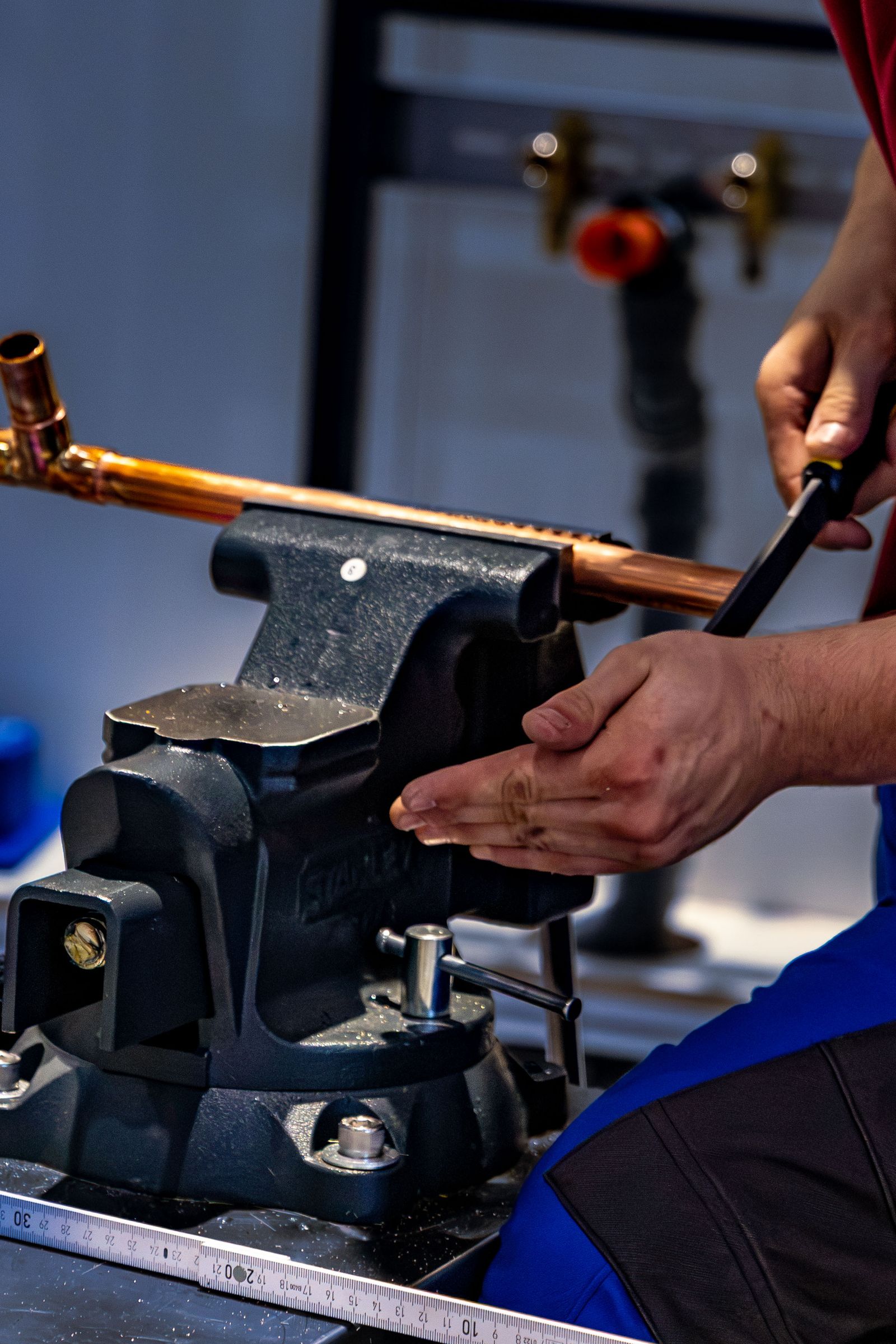
Spot repair
A small opening is made in the slab at the leak, the damaged section is repaired, and the floor is closed again. Often suits a single, well-located leak.
Reroute
The leaking line under the slab is taken out of service and a new one runs above it, through walls or the attic. Often raised when the leak sits under cabinets or finished floor.
Pipe lining
The inside of the existing pipe is coated in place. It's only offered where the technician judges the line suitable for it.
Repiping
Replacing part or all of the home's water lines. The conversation usually comes up after a second or third slab leak.
What steers the choice
Where the leak is, how many leaks the home has had, the pipe material and its condition, what sits above the leak, and how the house is laid out. You'll get upfront pricing on each option before work starts. After the repair is tested, restoration companies handle any drying and cleanup.
Had a slab leak before? Say so. It changes which options make sense.
Where we connect you with a technician
277 cities and communities in six regions, from the Gulf and Atlantic coasts to the Panhandle. Choose yours to see the local page.
Southwest Coast
Fort Myers, Cape Coral, Naples, Sarasota, Bradenton, Port Charlotte, Venice and more across Lee, Collier, Charlotte, Sarasota and Manatee.
Southeast Coast
Fort Lauderdale, Hollywood, West Palm Beach, Deerfield Beach, Boca Raton, Pompano Beach, Miami, Stuart and Port St. Lucie.
Tampa Bay
Tampa, St. Petersburg, Clearwater, Largo, Brandon, Riverview, New Port Richey, Wesley Chapel and Spring Hill.
Central Florida
Orlando, Kissimmee, Lakeland, Melbourne, Daytona Beach, Ocala, Vero Beach and The Villages.
North Florida
Jacksonville, Orange Park, St. Augustine, Ponte Vedra Beach, Gainesville and Tallahassee.
Panhandle
Pensacola, Gulf Breeze, Fort Walton Beach, Crestview, Destin and Panama City.
Common questions
What does a slab leak usually look or feel like first?
Often nothing dramatic. A water bill that creeps up, a floor that feels warm under bare feet, a hiss in the wall at night, or a baseboard that stays damp. In Florida's sandy soil, water can drain away for a long time before it shows, so small clues are worth taking seriously. A meter check is a good first step.
My water bill jumped while I was away for the season. Where do I start?
If you're still away, ask your manager or a neighbor to read the meter with everything off and, if they can reach it safely, close the main shutoff. Then call us. We can arrange for a technician to meet whoever has the key, and they'll start by separating the pool and irrigation from the house lines.
Could the pool or sprinklers be causing the high bill instead?
Yes, and in Florida it's one of the first things to rule out. If the meter stops once the pool fill and irrigation are shut off, the water is likely going outdoors. If it keeps moving, the house lines become the focus. The technicians we connect you with don't repair pools or irrigation, but finding out which it is comes first on every visit.
Will the floor have to be opened to find the leak?
Locating is done first with isolation, pressure testing, acoustic listening and, on hot lines, thermal imaging, with the aim of pinpointing the spot before any concrete is touched. Some leaks need more investigation than others. Whether the floor is opened for the repair depends on the option you choose; a reroute, for example, leaves the slab alone.
What's the difference between a spot repair and a reroute?
A spot repair goes through the slab to fix the leak where it is. A reroute leaves the old line under the floor and runs a new one above it, through walls or the attic. Which makes more sense depends on where the leak sits, what's on top of it, and how the rest of the line is holding up.
I own a ground-floor condo. Can a leak under my unit be traced?
Yes. The process is the same, with extra coordination, because lines and shutoffs may serve more than one unit. When you call, have the building manager's contact ready and mention anything neighbors have noticed. The technician may need access to shared shutoffs or a neighboring unit to isolate the right line.
This is our second slab leak. Does that change anything?
It changes the conversation. A second leak on an older line is one of the things that leads technicians to talk about rerouting that section or repiping, rather than another spot repair. Let us know when and where the first leak was fixed, and the technician can weigh the options with that history in mind.
Water is coming up through the floor. What should I do right now?
Turn off the main shutoff if you can reach it safely. Keep away from water near outlets or appliances, move valuables out of the way, and call us. If you smell gas at any point, leave the house and call the gas utility and emergency services from outside.
Are you the company that does the work?
No. We're a referral service. When you call, we connect you with an experienced, independent local leak-detection technician who works on Florida slab homes and condos. The technician we dispatch handles locating, explains the options and quotes the work upfront before anything starts.
Think there's a leak under the slab?
Call any time. Tell us what you've noticed and what the meter did, and we'll connect you with a technician near you.
(855) 731-0997 · upfront pricing, no hidden fees