Slab leak repair and replacement in Fort Lauderdale
Fort Lauderdale mixes waterfront and canal-side streets, mid-century neighborhoods and large later suburbs. Most homes are slab-on-grade, built across the 1950s to the 1990s, and a substantial share of the city is condos and townhouses. Copper is the common supply material in the older homes.
Homeowners in Fort Lauderdale often search for a foundation leak when the problem is an under-slab leak in a water line. The two are related: water escaping under the slab can soften the soil the foundation rests on.
Professional leak detection in Fort Lauderdale uses pressure tests, acoustic listening and thermal imaging to find the leak before any concrete is opened.
The ground is sandy with a high water table, and canals run through many neighborhoods. Water from a leak can drain away without showing, and damp is not always a supply leak. A technician tests before opening anything.
The pages below split the city into four parts. Each lists its ZIP codes and describes the housing and pipe types there.
A visit in Fort Lauderdale starts with a short conversation about what you noticed, whether the home is a house, a canal-side home or a condo unit, whether there is a pool and the age of the home. For condos we also ask about the manager and the unit shutoff.
The technician reads the meter, isolates the lines, pressure tests and listens across the floor. Pools and irrigation are ruled in or out. The findings, the options and the price are explained before work begins, and the decision is yours.
If you have a warm patch on the floor, a bill that has climbed or the sound of running water in a quiet house, those are the details that help most when you call.
A short history of Fort Lauderdale
Fort Lauderdale was incorporated in 1911 and the county seat of Broward County from 1915 on. The New River Settlement dates to the 1830s, with lasting growth from the 1890s.
Before the 20th century the area was known as the New River Settlement, with about 70 settlers living along the river in the 1830s. Three forts named Fort Lauderdale were built during the Seminole wars, the first in 1838, and the last was abandoned in 1842. Frank Stranahan began operating a ferry across the New River in 1893, and the Florida East Coast Railway reached the town in 1896. The first automobile bridge across the New River was built in 1904.
Because the story of Fort Lauderdale goes back to the 1830s, houses of several different ages can sit side by side here, so the technician asks early when the home was built and what the water lines are made of.
Fort Lauderdale geography and water
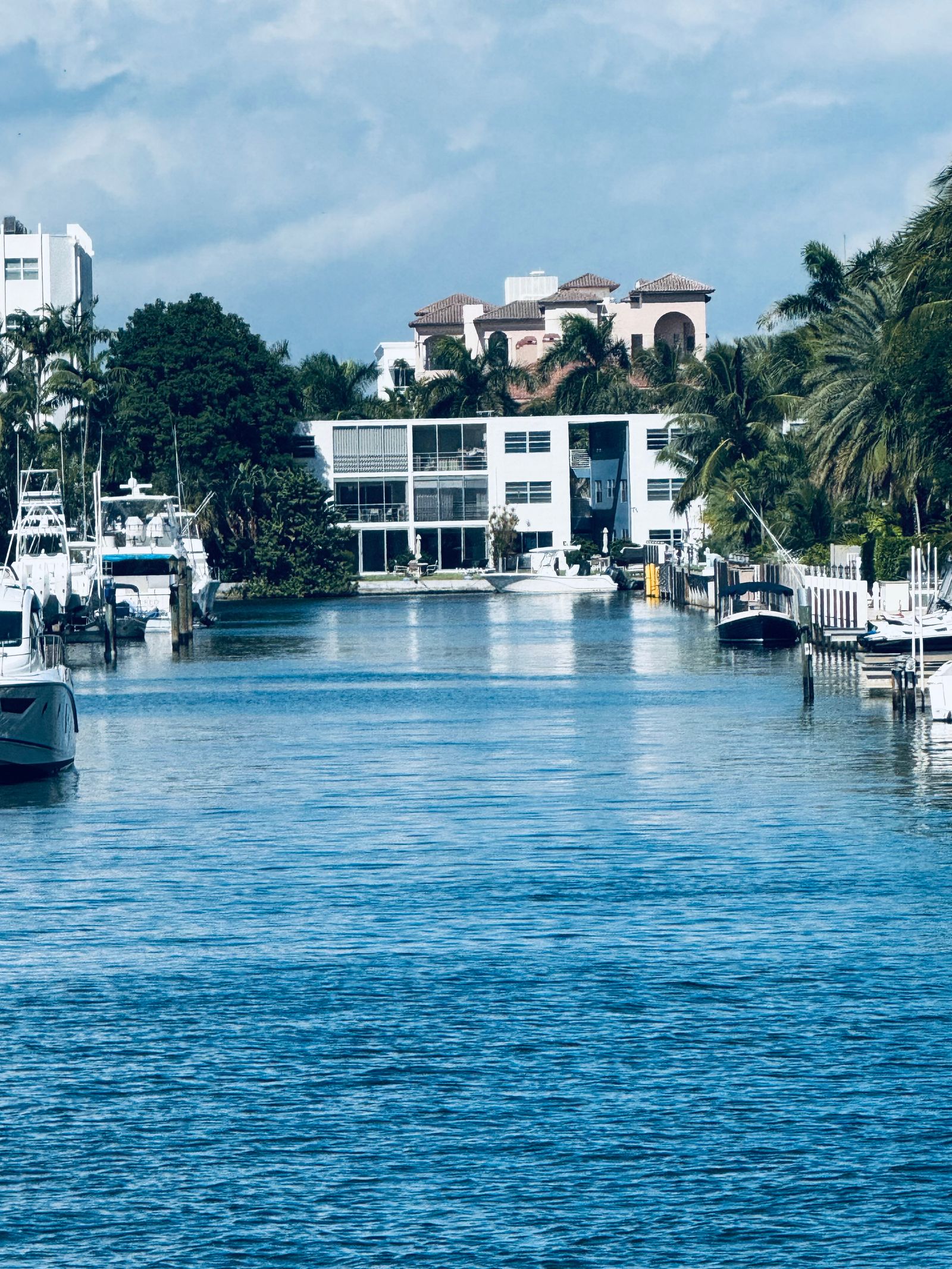
Fort Lauderdale sits on the Atlantic Ocean at the mouth of the New River. Fort Lauderdale is nicknamed the Venice of America and the yachting capital of the world for its canals and marinas. The New River links the Everglades with the Atlantic and the Intracoastal Waterway.
A wet patch or standing water around a home in Fort Lauderdale does not by itself point to a slab leak, which is why testing comes before any digging.
Getting around Fort Lauderdale: landmarks and nearby towns
Places people in Fort Lauderdale know include the New River and downtown Riverwalk; Las Olas; and Bonnet House.
Nearby communities include Dania Beach, Hollywood and Lauderdale-by-the-Sea.
Parts of Fort Lauderdale we cover
Choose the part of Fort Lauderdale closest to you for the housing, pipe types and ZIP codes there.
Away for the season?
For Fort Lauderdale homes, many homes here stand empty for part of the year, and a slab leak keeps running without anyone present. A short routine on the way out and on the way back is a simple form of protection. See before you leave leak checklist and seasonal home slab leaks.
Read the meter. With everything off, write down the reading and the date before you leave.
Close the main. Or leave it on and ask someone to check the dial at intervals.
Give someone a number. A neighbor or manager who can reach you and us.
On return, check before you unpack. Feel the floors, then open the main, close every tap and watch the meter.
Call if it moves. A moving dial in an empty or newly opened home is the reason to call.
The five-minute meter check
Around Fort Lauderdale, the meter check is the one safe test a homeowner can do, and it tells a technician a lot before they arrive.
Turn everything off. Close every tap and stop the washer, dishwasher and irrigation.
Find the meter. It is usually near the street or the front of the property. Lift the lid carefully.
Watch the dial. The small triangle or wheel spins at the slightest flow. The main dial should be still.
Wait an hour. Read the meter, wait with everything still off and read it again.
Call with what you saw. Share both readings, the time and any warm or damp areas. See water meter leak check.
Tell us what was fixed before.
Another Slab Leak? Call UsHousing across Fort Lauderdale
The Beach and Downtown. Between the beach and the New River the housing mixes mid-rise and high-rise condos, older low-rise buildings and single-family homes on canal lots from the 1950s onward. Pools are widespread.
Northwest Corridor. Northwest of the center, the housing is largely 1950s to 1970s block construction on slabs, with duplexes, small apartment buildings and many single-family homes. Copper supply lines are typical of the era.
Plantation and Sunrise Corridor. Moving west, the housing is dominated by 1970s to 1990s subdivisions and condo communities on slabs. Homes built in the late 1970s to mid 1990s sometimes have a gray plastic supply pipe from the period, though many have been repiped since.
Western Broward. In the west, most homes are from the late 1980s onward, larger and set on bigger lots, often in planned communities. PEX supply lines are common, along with copper in the earlier ones.
Slab leak service area in Fort Lauderdale
We serve Fort Lauderdale in Broward County, including ZIP codes 33301, 33304, 33305, 33306, 33308, 33309, 33311, 33312, 33313, 33314, 33315, 33316, 33317, 33319, 33321, 33322, 33323, 33324, 33325, 33326, 33327, 33328, 33330, 33331, 33332, 33334, 33351, 33394.
Slab leak services
In Fort Lauderdale, each page explains the process, the options and what to ask before agreeing to work.
- Pool leak or slab leak
- Emergency service
- Why Florida leaks hide
- How slab leaks are found
- Condo ground floor
- Seasonal home slab leaks
- Water meter leak check
- Slab leak repair and replacement
Options and price before work begins.
Call for Upfront Pricing